Open three tabs for Eastborough home prices on a Tuesday afternoon and you will get three different numbers. One site says the average is $586,850. Another says $590,800. A third, checked within days of the others, lands at $409,300. A fourth quotes a median of $395,000 with homes moving at $195 a square foot, while a national portal pegs the going rate closer to $162 a square foot. None of these are typos, and none of them are lying to you. They are all telling the truth about a market too small to average in any way that behaves like the word "average" usually implies.
If you are cross-shopping Eastborough against another Wichita-area neighborhood using the price you see on a portal, you are comparing a real number to a number that is basically noise. Here is why, and what to look at instead.
The Market Is Four Houses Wide
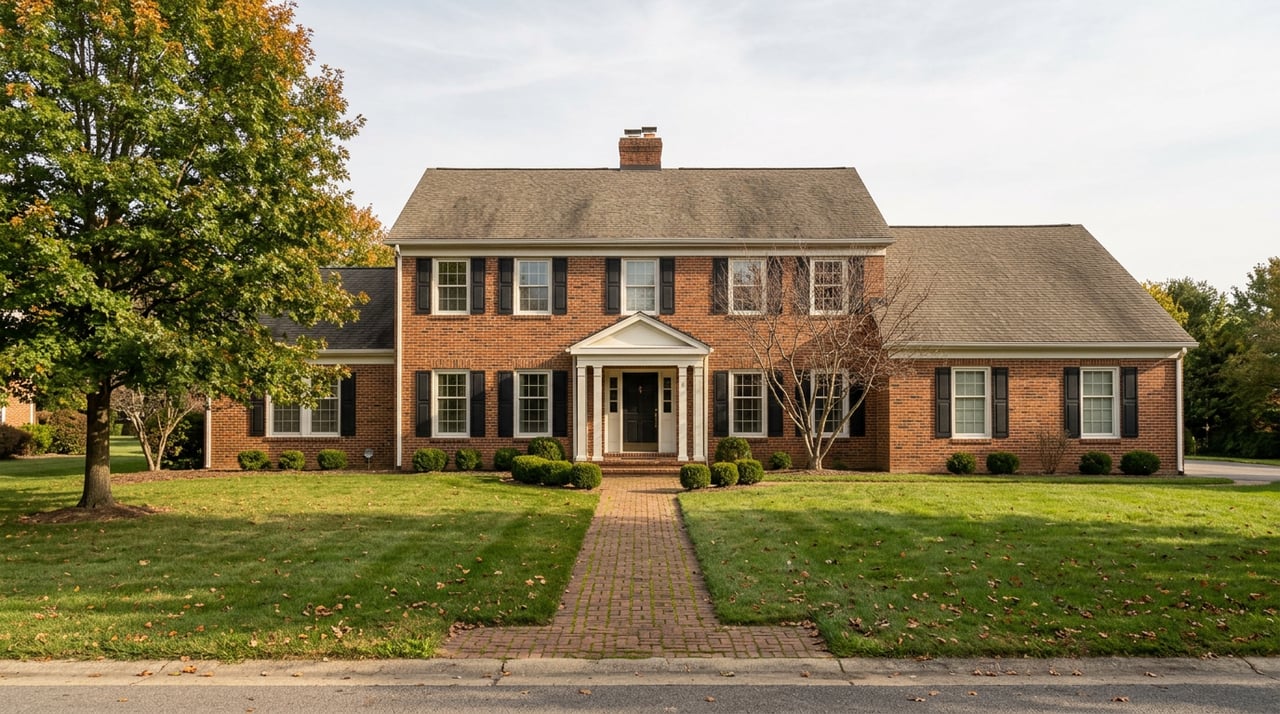
Eastborough is not a subdivision or a zip code carved out of Wichita for marketing purposes. It is its own incorporated city, complete with a mayor, a five-member council, and its own police department, sitting entirely inside Wichita's borders as an enclave. It has occupied the same four-tenths of a square mile since it combined with the neighboring Woodlawn Addition and incorporated in 1937.
That boundary has held for nearly ninety years, and so has the housing stock inside it. The 2010 census counted 328 housing units in Eastborough. The 2020 census counted 313. In a city that size, you are not looking at a market with hundreds of transactions a year to smooth out an average. You are looking at a market where three, four, or five homes being actively listed at once is normal, not a temporary dip.
That scarcity did not happen by accident. When Eastborough incorporated, it wrote architectural controls into its founding rules, including a minimum home size of 1,700 square feet by 1953, and the city was close to fully built out by 1973. That floor from seventy years ago is part of why average living space in Eastborough still runs near 4,012 square feet today against a countywide average closer to 2,115. Ownership tends to run long here too. Census-derived estimates put the homeownership rate above 96 percent, and the city is known locally for second- and third-generation families who never had a reason to sell.
Put those two facts together, a fixed housing stock under 400 units and an ownership base that rarely turns over, and you get a market where the entire active inventory at any given moment can be counted on one hand.
Why The Averages Fight Each Other
An average is only useful when it is drawn from enough data points that a single outlier can't swing it. Ask what the average income is across a stadium of 40,000 people and one billionaire in the crowd barely moves the number. Ask the same question of four people in a room and that same billionaire changes the answer entirely.
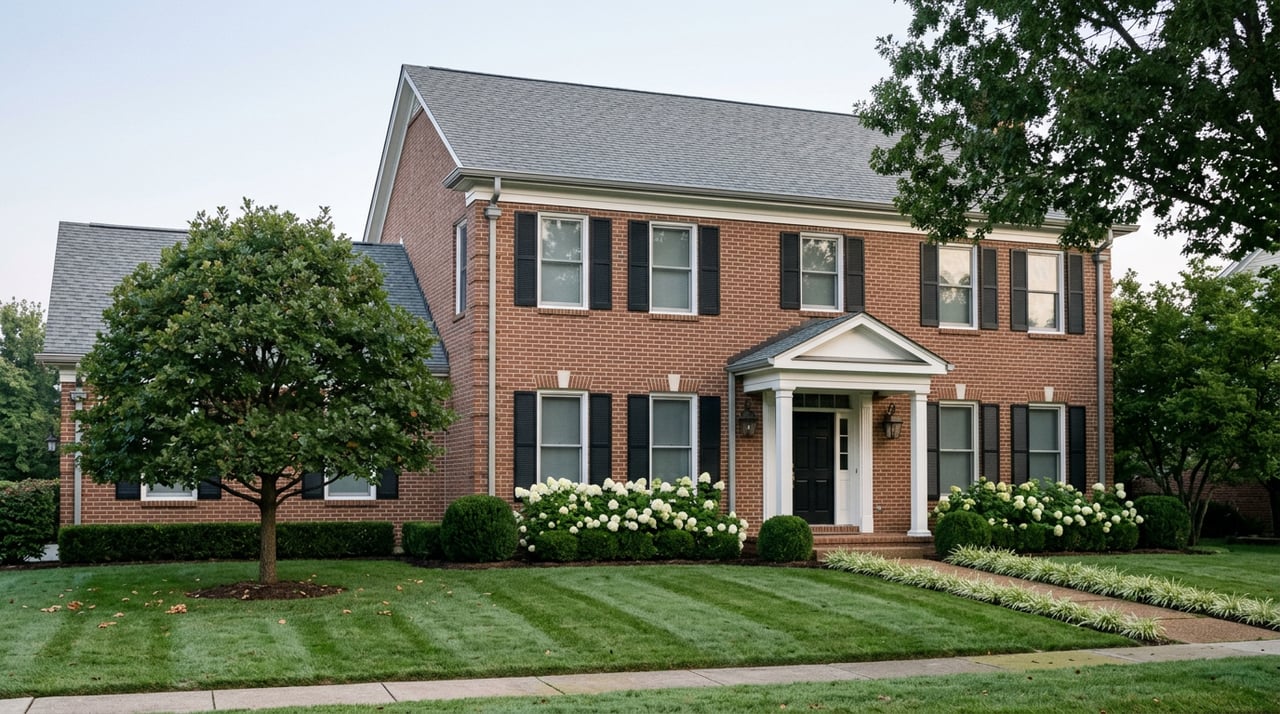
Eastborough's home price data is the four-person room. Recent active listings have spanned a pending home near 6,000 square feet asking $950,000 down to a three-bedroom around 2,555 square feet asking $422,500, roughly half a million dollars apart on homes drawn from the same four-tenths of a square mile. Average just three or four listings pulled from anywhere along that spread and the result can land anywhere from the $400,000s to the $600,000s, which is exactly the range separating the published averages of $409,300, $395,000, $586,850, and $590,800 above. Neither site publishing those numbers is wrong. Each is describing a different four-house room, pulled from the same shallow pool of listings at a slightly different moment, and the room changes every time a single house comes on or goes under contract.
This is also why per-square-foot numbers vary so much depending on where you look. Eastborough's homes run large and old enough that finish level and updates differ enormously from one to the next, so the price per square foot on any single listing can swing widely from the next one down the street. Average that across three or four homes and the per-square-foot figure will bounce around just as much as the total price does.
None of this means the market itself is unstable. It means the published aggregate is a description of whichever handful of houses happened to be for sale that week, not a description of Eastborough home values in general.
What This Means If You're Actually Comparing Neighborhoods
If you are trying to decide between Eastborough and a larger Wichita-area neighborhood, resist the urge to put the published average price side by side with a market that has real transaction volume behind its number. A neighborhood with dozens of closings a quarter can support an average that means something. Eastborough's number, whatever site you pull it from, is often built from single digits.
That doesn't mean the market can't be read. It means it has to be read house by house rather than aggregate to aggregate. A buyer serious about Eastborough should be looking at what specific homes have actually closed recently, what they sold for relative to their size and condition, and how long they sat, rather than anchoring to whatever average happens to be displayed that day. A seller pricing a home here faces the same reality in reverse. Pulling a citywide average to justify a list price does not hold up when the citywide pool might be three houses, one of which could be a fully renovated mid-century home and another a property that has not been touched since the 1960s.
This is also where knowing the individual homes matters more than knowing the aggregate. The same MLS feeds behind these listings show Pam Hesse as the agent on one of Eastborough's current listings, which is the kind of house-specific knowledge no portal average can substitute for. You cannot back into a fair number for a market this thin from an aggregate built on a sample of four.
The Scarcity Is Also The Appeal
The same structural scarcity driving the price confusion is a large part of why people want to live here in the first place. Eastborough was laid out in the late 1920s as an English-style village, with winding drives, broad lawns, a lake, and parks, and it still runs its own 20 mph speed limit along streets that have no sidewalks. Residents get their own police department, their own municipal court, and the kind of quiet that comes from a city that stopped growing on purpose decades ago. That is not a market that behaves like the rest of Wichita, and it is not supposed to.
For a buyer, that means patience is part of the process. If nothing suits you among the three or four active listings this month, next month's three or four will be different homes entirely. For a seller, it means the case for your price should be built from the specific comparable homes that have actually sold nearby, not from a headline average that could shift by six figures depending on which website generated it.
FAQ
Why do different real estate websites show such different average prices for Eastborough? Each site is pulling from the same small pool of active MLS listings, but the total pool at any moment is often just three to five homes. A single high-value or low-value listing coming on or going under contract can swing the average by hundreds of thousands of dollars, even though the underlying market hasn't moved.
How many homes are actually in Eastborough? Census counts have put the total housing stock at roughly 313 to 328 units for the past two census cycles, inside a city that spans about four-tenths of a square mile.
Is Eastborough part of Wichita? No. Eastborough is a separately incorporated city that has existed as an enclave surrounded by Wichita since 1937, with its own mayor-council government and police department, though it contracts with Wichita for water, sewer, and fire service.
Does the small market mean prices are less reliable? Not less reliable, just less meaningful in aggregate form. Individual sale prices are entirely real. It is the citywide average or median, built from a handful of data points, that should be read with caution.
If you are weighing Eastborough against another neighborhood, or you want an honest read on what a specific Eastborough home is actually worth rather than what a portal average says, Pam & Ashley can walk through the recent individual sales with you house by house. Book a free consultation and get a number built from actual comparables, not a four-house average.